Solar Panel Repair: Wiring, Connectors, Mounts and Monitoring
Solar repair starts with finding why output is down. The usual causes are small and fixable: a connector that has worked loose or corroded, wiring chewed by squirrels, a cracked panel, a loose mount or a monitoring gateway that has stopped reporting. The panels themselves rarely fail on their own.
Describe the job and add your city. Free to request, no obligation.
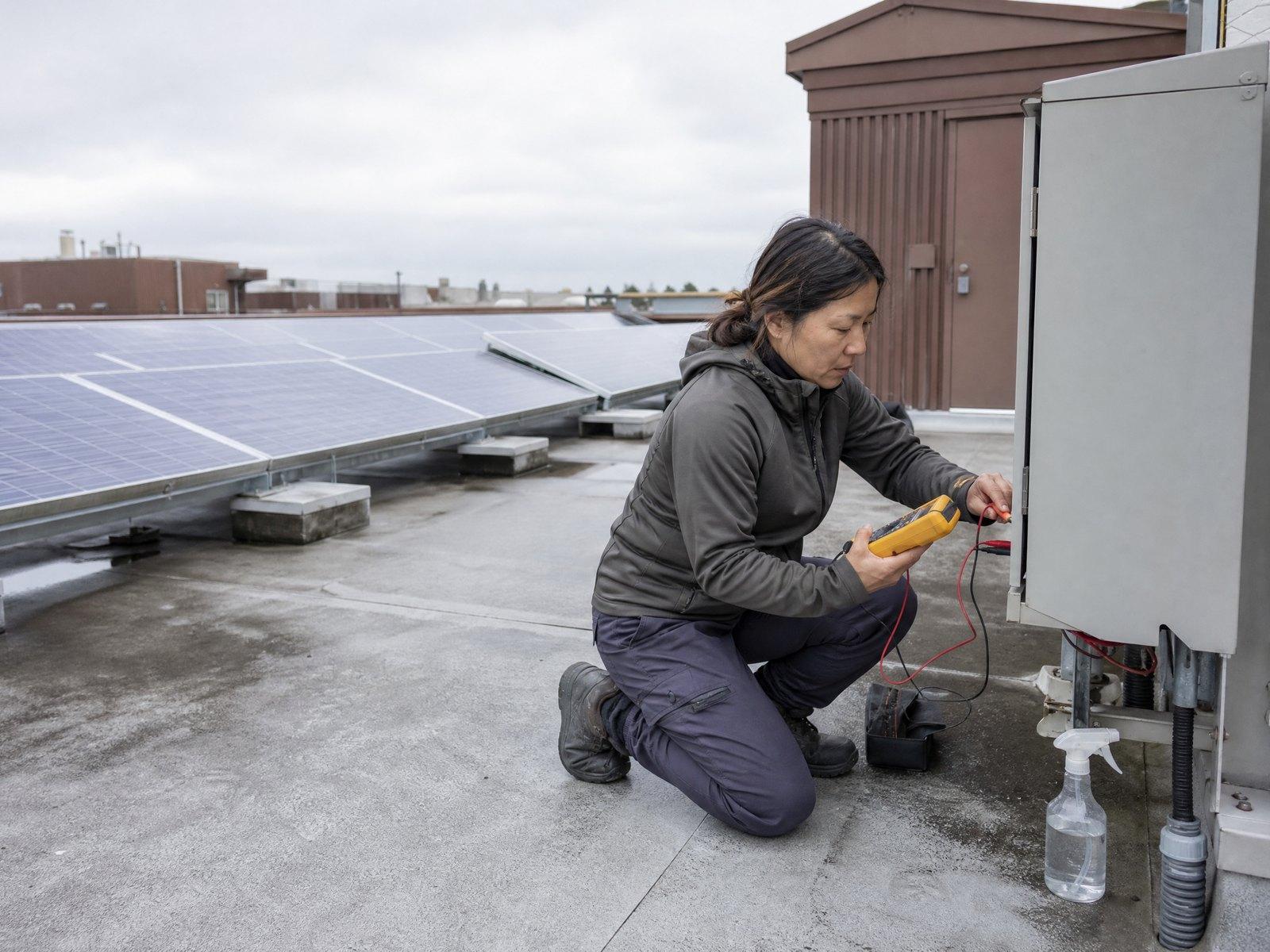
Because the whole array is wired in series strings, one bad panel or connector can pull down a full row. That is why a drop in production often looks bigger than the actual fault. The fix is to test string by string, find the weak point and replace only that part.
Yearly maintenance catches many of these before they cost production. A visit compares real output with what the system should produce, checks wiring, mounts and the inverter, and looks at what has changed on the roof, such as growth overhead or nesting animals. It does not replace repair, but it keeps repairs small.
What the work includes
- Comparison of actual production against the expected output
- String testing to locate underperforming panels and connectors
- Replacement of damaged or corroded MC4-style connectors
- Repair or replacement of chewed, frayed or exposed wiring
- Tightening or replacing loose mounts and rail clamps
- Replacement of cracked or failed panels with a compatible model
- Installation of mesh critter guards around the edge of the array
- Monitoring repair: gateway, Wi-Fi link or communication faults
Signs a solar system needs repair
Production well below last year's same month on clear days
One row or section producing much less than the others
Scratching, nests or droppings under or beside the panels
Visible cracks, burn marks or discoloured cells on a panel
Rattling rails, sagging panels or lifted flashing on the roof
A monitoring app that shows gaps or no data at all
How the work goes, step by step
Tell us what you notice
Share monitoring screenshots, error codes and when output changed.
Diagnostic visit
The specialist tests strings, inspects connectors and wiring, and checks the mounts and inverter.
Written findings and quote
You see what failed, what is recommended now and what can wait.
Repair
Faulty parts are replaced, wiring is repaired or protected, and loose mounts are secured.
Retest
Output is checked against the expected values, and monitoring is confirmed to be reporting.
What changes the price
- Finding the fault
- Diagnosis takes time on a large array with many strings, and it is part of the cost.
- Type of repair
- Reseating a connector is cheap. Replacing a cracked panel or rewiring a damaged section costs more.
- Panel availability
- Older models can be discontinued, which may mean finding a close match or reworking a row.
- Roof access
- Steep or tall roofs need safety gear, and reaching the middle of a large array takes longer.
- Animal damage
- Wiring chewed in several places and guard installation add labour.
- Warranty status
- A fault covered by the manufacturer or installer warranty may be handled differently, so mention what you have.
What a good quote spells out
- The cause of the output drop stated in plain words, not only a list of parts replaced
- Whether parts are replaced like for like and from which maker
- How roof penetrations are resealed if a mount or flashing is touched
- How critter guards are fastened so that they do not damage the panels or void a warranty
- A before and after production check, so you can see that the repair worked
Solar Maintenance & Repair: questions people ask
Why is a solar system producing less than it used to?
Common reasons are shading from tree growth, dirt, a failing inverter, loose or corroded connectors and a faulty panel. Comparing monitoring data month to month helps narrow it down.
Can squirrels damage solar panels?
They can chew the wiring underneath, which can cause faults and even fire risk. Mesh guards around the edge of the array keep them out once nests are removed.
Is it worth repairing an old solar system?
Often yes, because the panels usually outlast the other parts. Replacing a connector or inverter costs far less than a new system.
Is solar maintenance really needed every year?
Panels have no moving parts, but wiring, mounts and the inverter can degrade. A yearly check catches issues early, particularly after a harsh winter or storm.
Other Alumen services
Thinking About Solar? Start With Your Roof.
Fill out the quote form with your city and what you have in mind. A local specialist follows up to review your property and give you a written quote. Free to request, no obligation.
Request a free quote →